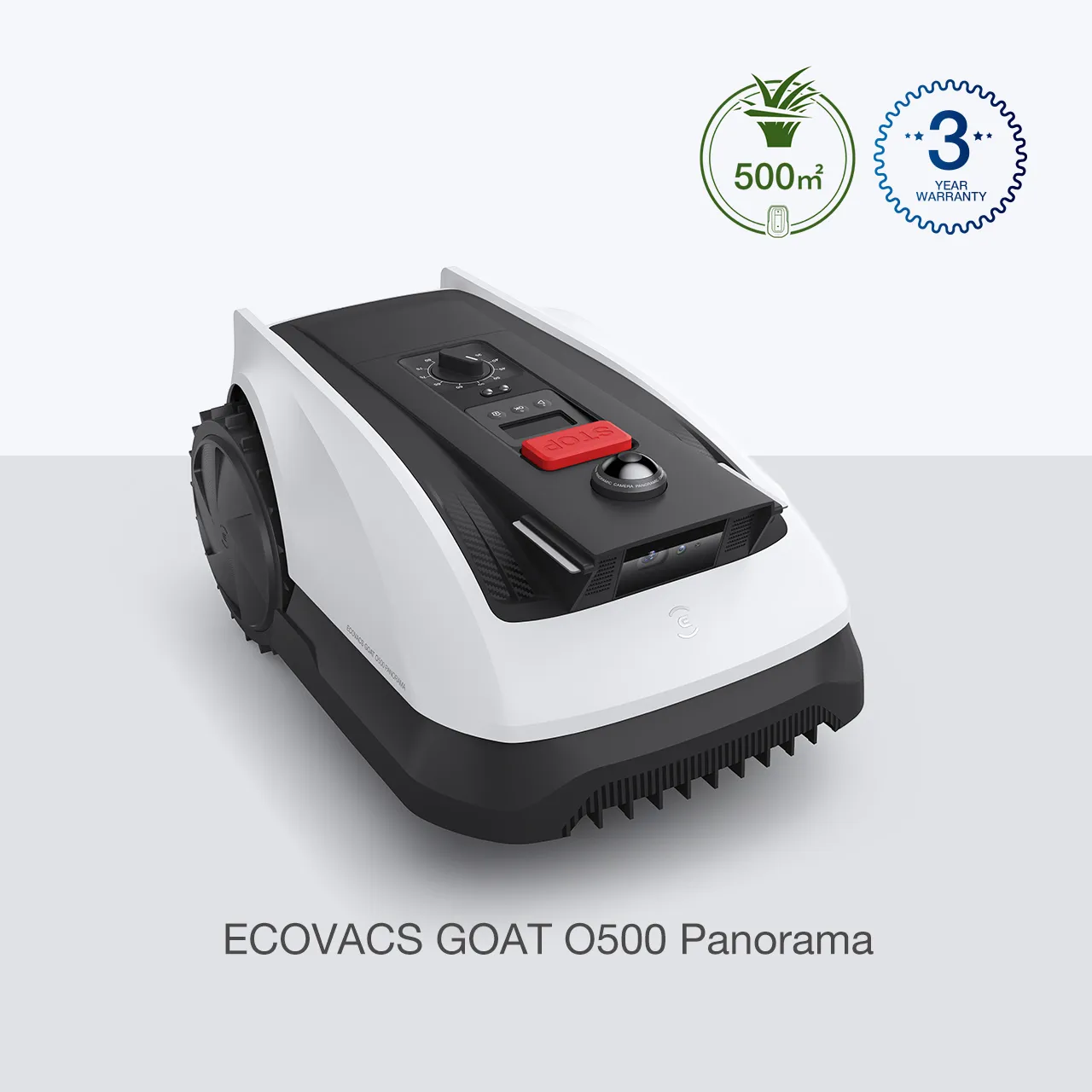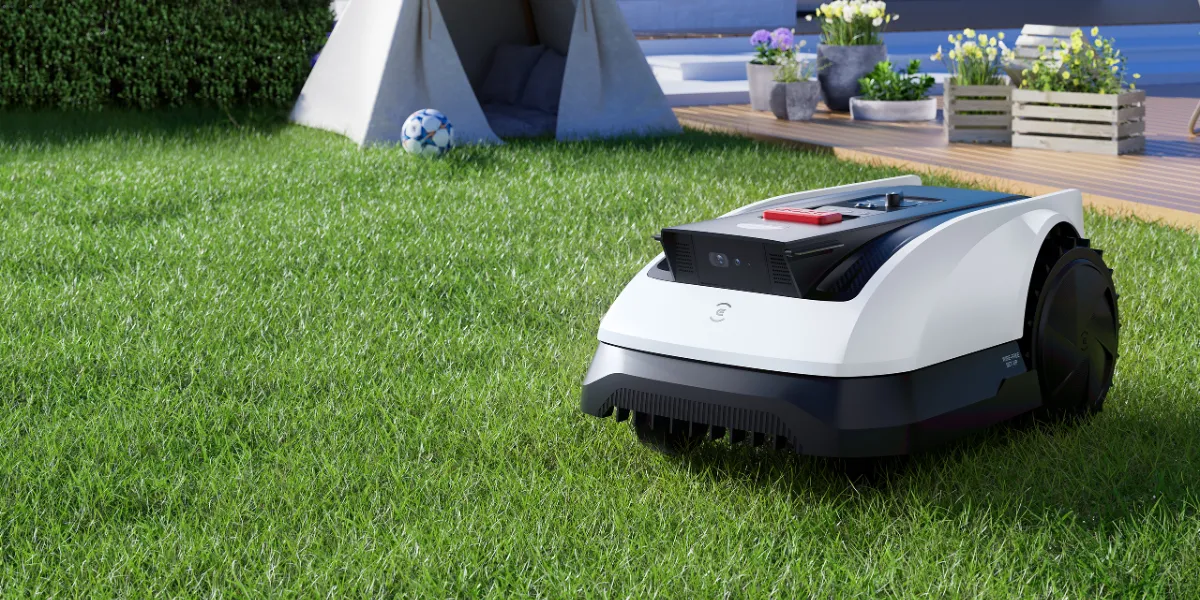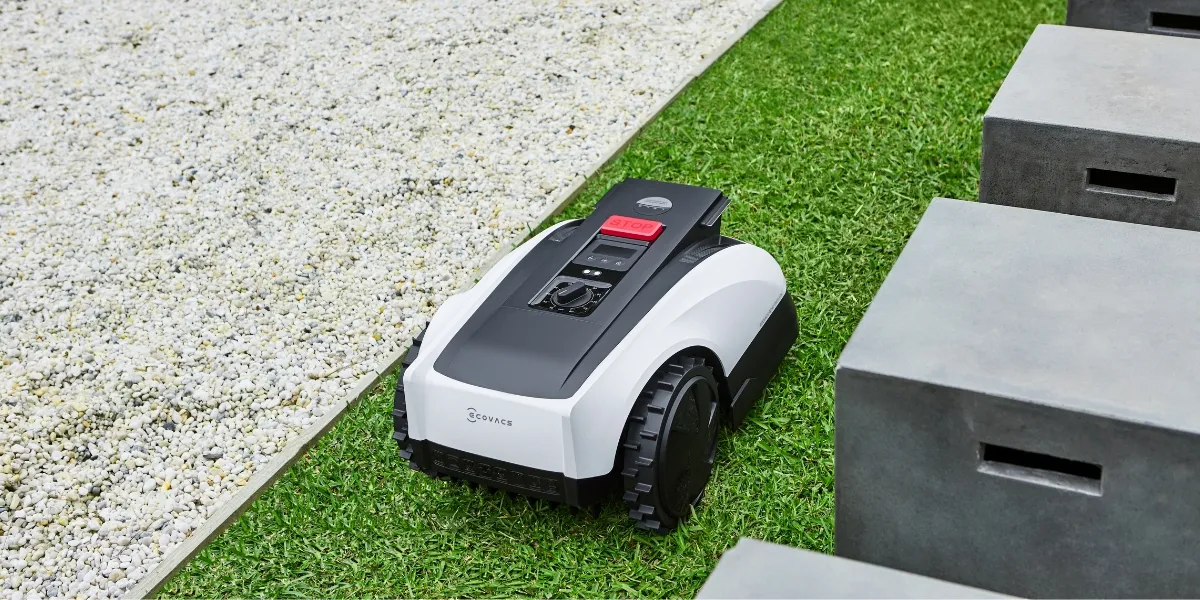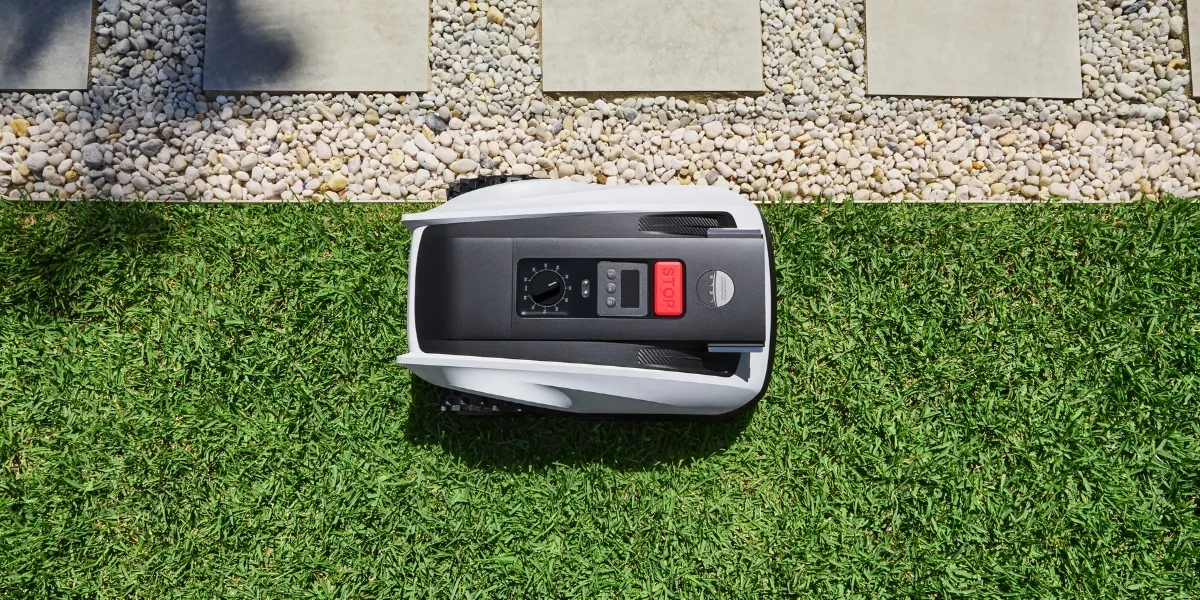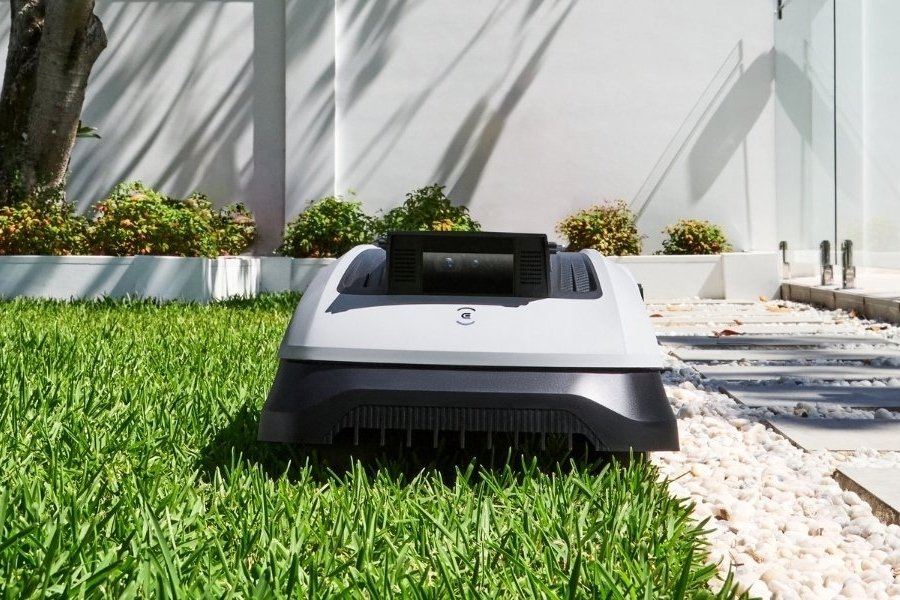
For anyone that has a garden to take care of, robot lawn mowers are appealing thanks to their autonomous operation that saves time and physical effort. In fact, the European robotic lawn mower market, including the UK, is projected to grow at a compound annual growth rate (CAGR) of 7.41% between 2025 and 2030. As newer models feature more advanced technology, these automated mowers are becoming smarter at navigating your garden and trimming grass with customized settings.
Understanding how they work and what key features they have can help you choose the right model for your property.
What Is a Robot Mower?
A robot lawn mower is a smart device that automatically trims your grass using built-in sensors, blades, and navigation systems. Powered by a battery, this self-sufficient machine moves across your garden based on programmed paths or defined boundaries and cuts grass to your preferred height, speed and schedule.
Since the first model was introduced in 1995, automatic lawn mowers have evolved with more precise navigation, real-time obstacle detection, better battery life, and smarter features. Take GOAT mowers, for example: their LiDAR-enhanced RTK navigation (LELS) upgrades with 2cm positioning precision, and you can remotely adjust various settings via the user-friendly ECOVACS HOME app.
How Do Robot Lawn Mowers Work?
A robot lawn mower works by automatically navigating through your garden using advanced sensors and technologies such as LiDAR and RTK navigation. It cuts grass based on preset parameters, including speed, height, designated areas, and schedules. Powered by a battery, it mows quietly while constantly detecting obstacles like plants and small animals. Models with continuous charging can cover larger areas.
To understand how a robotic mower works, here are its core components.
Boundary setup
Smart mowers define their work area and cut along the edges using either physical boundary wires or virtual mapping. Boundary wires are manually installed along the edges and emit a magnetic field that the mower can detect, blocking it from crossing over. Newer models like GOAT use sensors to create virtual maps, so you can set no-go zones or add new areas as needed.
Navigation and sensors
Smart mowers use navigation systems powered by advanced technologies like LiDAR, RTK, or GPS. Combined with onboard sensors, they not only map your lawn accurately but also detect obstacles and adapt to terrain changes in real time, assuring safe mowing in your garden while you relax.
Blade system
Designed for regular trimming, robot mowers cut grass a little at a time using small, high-speed rotating blades. By trimming frequently, the fine clippings left behind are short enough to decompose quickly and enrich the soil. This strategy promotes healthy lawn growth while saving you from the need for grass collection.
Slope Climbing
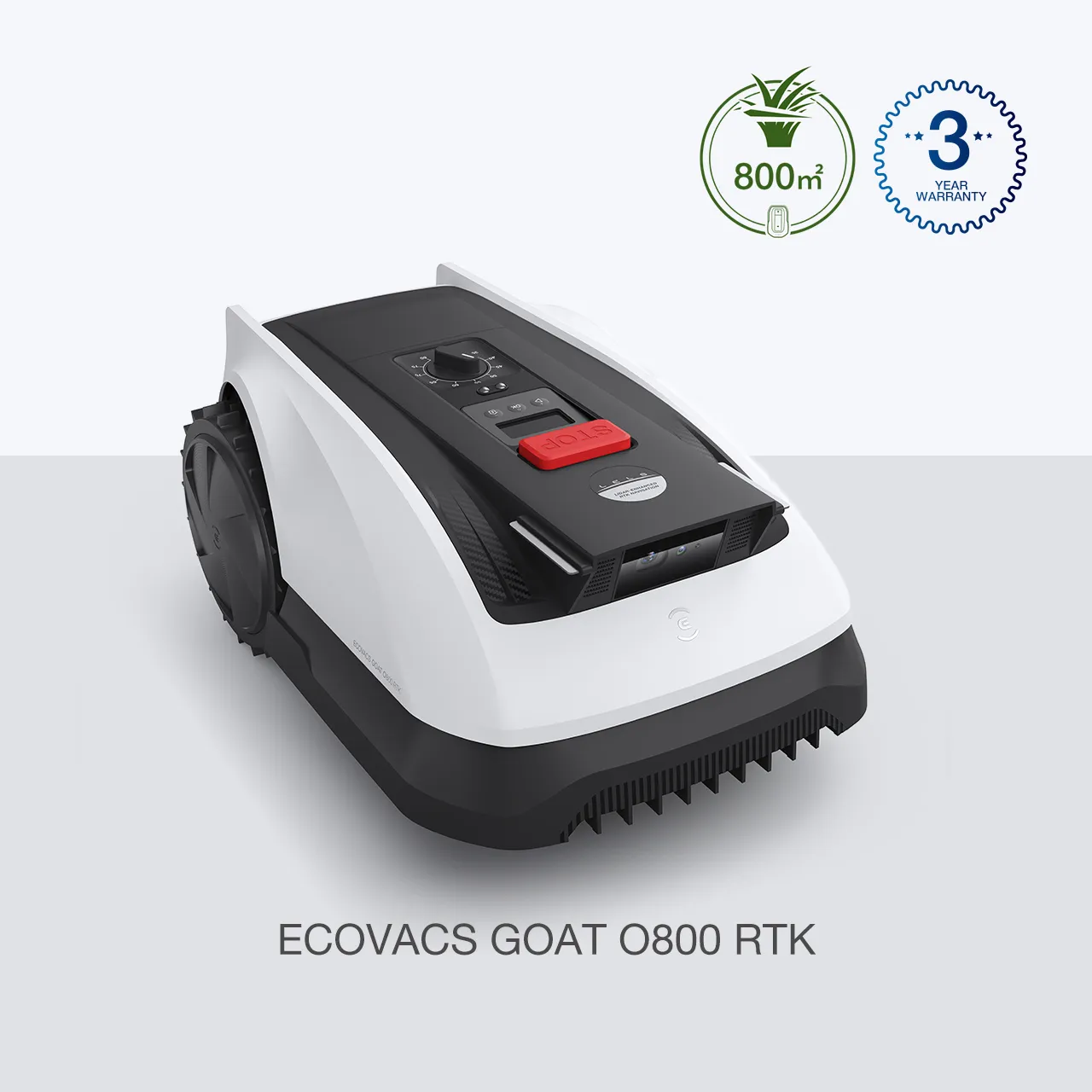
Not all gardens are open and flat. High-end models like the GOAT O800 RTK are equipped with a 18V energy platform that allows them to climb steep slopes up to 24°. The powerful motor also supports crossing barriers up to 3cm.
Battery and charging station
Powered by rechargeable batteries, robot mowers automatically return to their charging station when the battery is low. After recharging, they resume working from where they left off until the entire lawn is covered. The compact charging station can be conveniently placed in any corner, as long as it has access to power.
Smart features
On top of advanced navigation and mowing technologies, modern models further provide various personalisation options through the companion app like ECOVACS HOME app. You can adjust cutting height between 3-8cm, set schedule mowing, and monitor progress, even when you're away for work or on holiday.
What Navigation Technology Do Robot Lawn Mowers Use?
Robot lawn mowers use a combination of navigation systems and sensors, including LiDAR-enhanced RTK navigation (LELS), AI vision, and 3D ToF LiDAR, to deliver precise, safe, and efficient mowing. These technologies support accurate positioning, obstacle detection, and edge trimming; some models also use boundary wires to define work zones.

RTK Navigation
Real-Time Kinematic (RTK) navigation uses the Global Navigation Satellite Systems (GNSS) and a fixed reference station to enhance the position and mapping accuracy. The GOAT O800 RTK, for instance, receives signal from up to 45 satellites and boosts positioning precision to 2cm.
LiDAR
LiDAR (Light Detection and Ranging) technology emits laser pulses to measure the distance between the mower and nearby objects. It can improve navigation in shaded areas and build a 3D depth map.
GPS
GPS (Global Positioning System) uses satellite signals to provide basic data and determine the mower’s position on your lawn, helping it stay within the designated area and follow the planned path. It is commonly paired with RTK for better accuracy in larger or irregular gardens.
Cameras
Built-in cameras enable auto mowers to visually detect objects such as garden furniture, rocks, or plants. This additional visual layer improves obstacle detection and safety and lowers the risk of collisions or damage.
Obstacle Sensors
Infrared or ultrasonic sensors detect surrounding objects in real time to help prevent accidental collisions with your pets, toddlers, or small animals like hedgehogs that can show up out of the blue.
Boundary Wires
Some automatic mowers rely on boundary wires, physical cables installed around the edge of a lawn, to define the mowing area. These wires carry an electric current that creates a magnetic field for the mower to detect and use to stay within borders.
What Smart Features Do Robot Mowers Have?
To optimize automated lawn care, robot lawn mowers are designed with smart features, from navigation and obstacle detection to customization, self-charging, safety and full app control. These technologies allow the mowers to keep your garden well-groomed without your intervention, even on uneven ground, complex terrain, and in unpredictable weather.
Mapping
Smart mapping helps the mower to scan and learn your garden’s configuration, then calculate the most efficient mowing paths. This way, the machine avoids overlapping cuts, optimizes coverage, and adapts to irregular landscapes.
Remote Control & Customization
You can manage the device through dedicated apps, such as starting a mowing session with GOAT and monitoring its progress using the ECOVACS HOME app. You can also adjust mowing times, cutting heights, and set no-go zones on the app.
Obstacle Avoidance & Sensors
Equipped with infrared, ultrasonic, or visual sensors, smart mowers like the GOAT O800 RTK can detect and avoid over 200 types of objects, including gardening tools and decorations. This model responds quickly by automatically rerouting to prevent collisions.
Continuous Charging
Advanced models resume mowing right where they left off after recharging, allowing them to cover larger lawns. For example, the GOAT O800 RTK can mow up to 800 ㎡.
Safety
Unpredictable weather is a major concern, as cutting wet grass can damage both the lawn and the mower. Smart mowers like GOAT address this issue with their IPX6 waterproof design and rain sensors that pause operation, effectively protecting the device against outdoor elements.
How to Set Up a Robot Lawn Mower?
Setting up a smart lawn mower generally involves placing the charging station, finding the mowing area with boundary wire or virtual fence, and connecting the device to the app, with specific steps differing across brands and models.
For GOAT robot mowers users, get started with the following steps:
- Press and hold the “OK” button to turn it on, then set a PIN code for security.
- Download the ECOVACS HOME App and connect the mower via Bluetooth and Wi-Fi using a 2.4GHz network.
- Install the charging station in a flat, open area with a strong Wi-Fi signal and power supply.
- For models like GOAT O800 RTK, install theRTK reference station. Choose an open area at least 2 m away from buildings and trees for optimal performance.
Once all parts are set up, you can start mapping your lawn and mowing.
How to Choose the Right Robot Lawn Mower for Your Needs?
Choosing the right robot mower should start with analyzing your lawn size, terrain, obstacles, and budget. Also, make sure the mower can navigate the narrowest paths. Look for models with sufficient battery life, smart navigation, obstacle avoidance, slope-climbing ability, safety features, and adjustable options to suit your garden and minimize the need for manual touch-ups.
Lawn Size
Small lawns can opt for compact designs for navigating narrow paths and sharp corners, while larger gardens, need mowers with continuous charging and more intelligent navigation to cover wide or complex areas efficiently.
Obstacles
If your garden is filled with plants, steep slopes, or outdoor furniture, opt for auto mowers equipped with sophisticated sensors and cameras. For instance, AIVI 3D Obstacle Avoidance combines a 150° fisheye camera, AI-powered algorithms, and 3D ToF LiDAR to detect and avoid over 200 types of obstacles in real time.
Budget
Entry-level models start around £600, while higher-end models can cost over £700. The latter typically includes more intelligent features like LiDAR and RTK-enhanced navigation, longer battery life, and more personalisation options.
Maintenance
Low-maintenance models are easier to manage; therefore, prioritize those with washable components and durable blades. GOAT smart mowers, for example, are IPX6 waterproof, making them easy to clean with a quick rinse.
Smart features
Other smart features like app control for scheduling, setting zones, adjusting cutting speed, and real-time tracking provide added convenience. Protective measures such as rain sensors, theft protection, and error alerts also make maintenance much easier to manage.
FAQ
How to use a robot lawn mower?
Place the mower on the lawn, set up the boundary or virtual map, connect it to the app, and set the schedule. It will then automatically mow, recharge, and resume work as programmed.
Do lawn mowers pick up grass clippings?
No, robot mowers do not have a mechanism to pick up grass clippings; instead, they finely mulch the grass as they cut, letting the clippings fall back onto the lawn and act as a natural fertilizer.
How do robot mowers know where to cut?
Smart mowers create virtual maps using a combination of technologies like RTK, GPS, and sensors then plan an optimized route. Some models rely on boundary wires to define the mowing area.
Related Products