Household cleaning is a universal routine, but how it is approached can differ greatly depending on the home, lifestyle, and generation. From the frequency of cleaning specific rooms to the challenges people face and the tools they rely on, everyday habits reveal much about modern life.
And to better understand cleaning habits, Ecovacs initiated a survey of 1,000 Americans, conducted with the support of an independent research agency, uncovering insights into their routines, cleaning challenges, pet-related messes, unusual habits, and even the dirtiest things found during chores — all analyzed through the lens of gender, generation, and income.
Explore the key trends that shape how Americans clean their homes today.
Key Findings
- Americans clean their bedrooms, living rooms, dining rooms 14–17 times per month.
- On average, they spend 56 minutes per week cleaning their floors.
- 33.3% of Americans struggle with motivation and energy to clean their homes.
- 15.6% say they simply don’t have enough time for home cleaning.
- One-third of Americans feel comfortable wearing outdoor shoes inside their home.
- 31.8% admit to putting things “away” to look tidy without actually cleaning.
- 12.1% have used cleaning as a form of punishment.
- 32.3% have discovered dead bugs and/or rodents while cleaning when cleaning.
- 1 in 3 pet owners clean shedding hairs and spilled food or water daily.
- 21% of men rely on a roommate or partner for cleaning, and 45.8% of Gen Z don’t clean themselves at home.
How Often and How Long Do Americans Clean Their Homes?
Americans dedicate significant time each month to keeping their homes and floors clean, with clear patterns emerging across rooms, generations, and even gender.
Main rooms cleaned 14–17 times monthly, duties shared by men and women
The kitchen stands out as the most frequently cleaned room, averaging 20 cleanings per month — nearly once a day — reflecting its central role in daily life. Bedrooms, living rooms, and dining rooms follow closely, typically cleaned around 14 to 17 times per month, underscoring their importance as high-use areas.
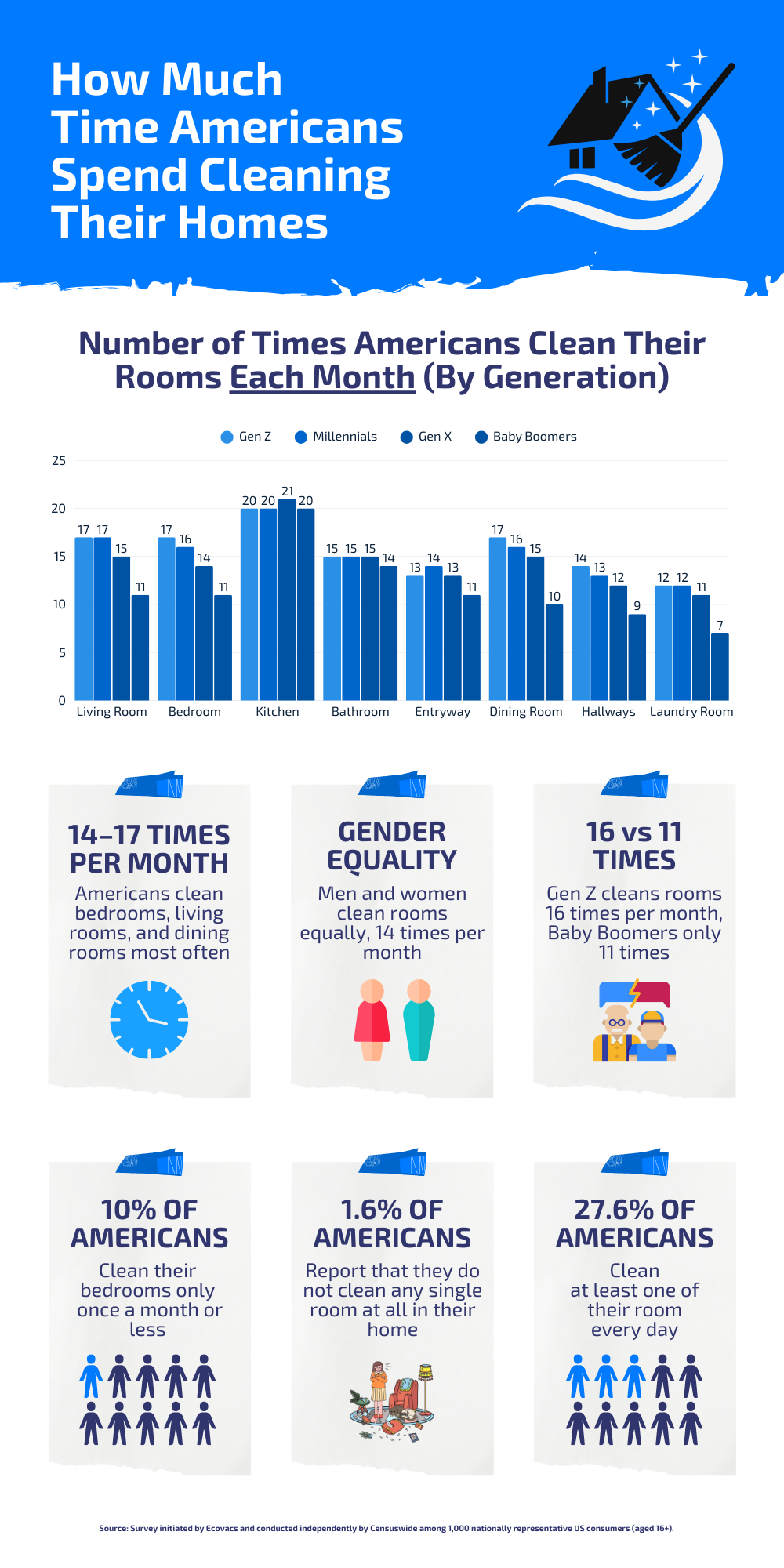
Generational differences are also evident. Younger respondents, particularly Gen Z and Millennials, reported cleaning more often than Baby Boomers. For instance, they tend to clean bedrooms, living rooms, and dining rooms at higher rates, with averages reaching 16–17 times per month compared to just 10–11 among Boomers.
Interestingly, the survey also reveals a sense of balance between men and women when it comes to cleaning responsibilities. Both groups reported similar frequencies across nearly all rooms, suggesting that household cleaning duties are largely shared between genders.
Yet while many Americans clean frequently, a notable share report doing so only occasionally, even when it comes to the most commonly used rooms in the home.
About 10% of respondents said they clean their bedroom once a month or less, 8.5% their living room, and 7.4% their bathroom. Even the kitchen, the most frequently maintained room, is cleaned just once a month or less by 5.7% of Americans.
Overall, 27.6% of respondents reported cleaning at least one room every day, while a very small minority, about 1.6%, said they do not clean any room at all.
Floor cleaning takes 56 minutes weekly, higher for Gen Z than Boomers
Beyond the frequency of cleaning different rooms, the survey also examined how much time Americans spend on floor care on a weekly basis. On average, respondents reported spending 56.6 minutes per week vacuuming, mopping, or sweeping their floors.
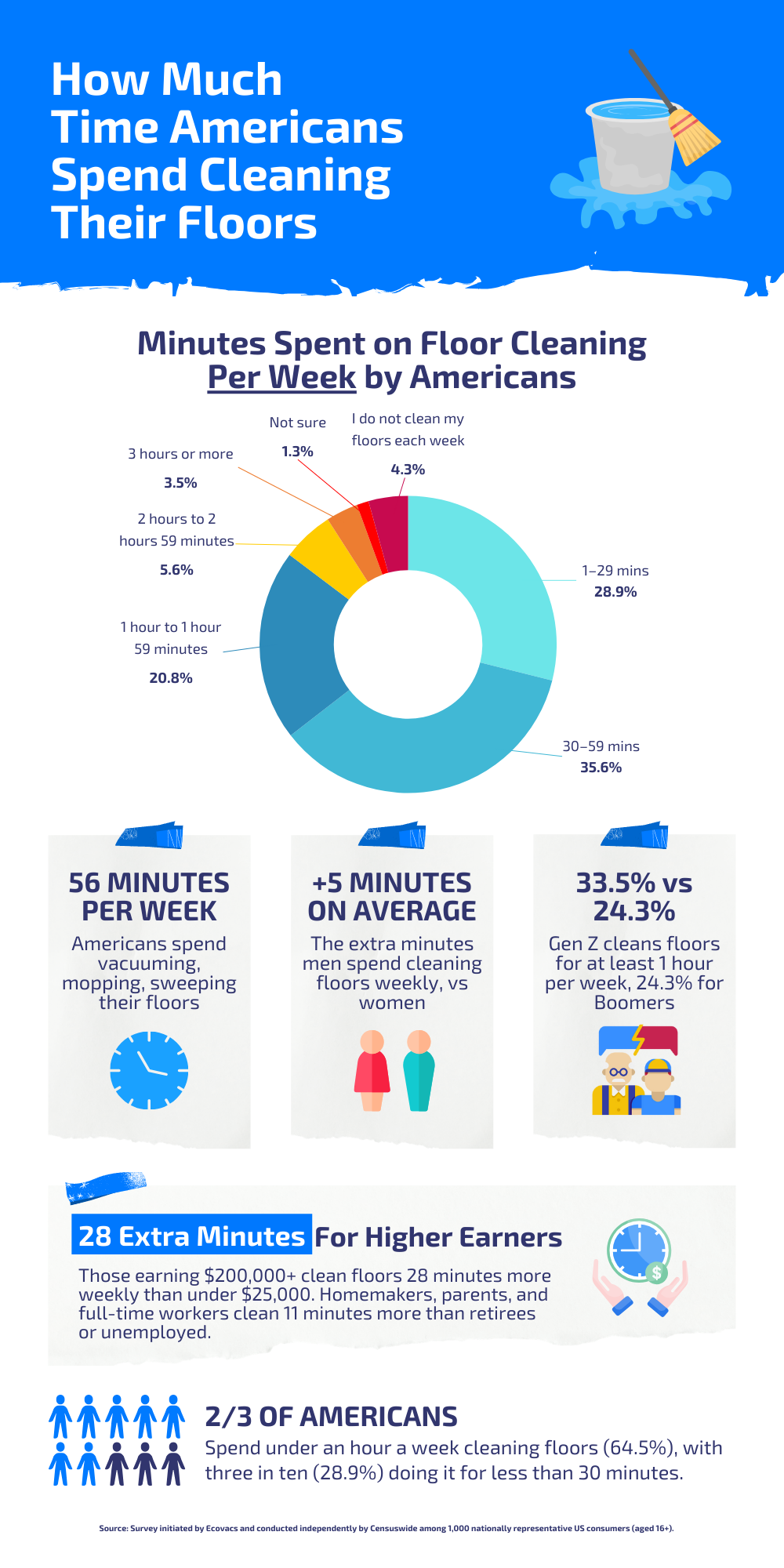
Patterns emerge across income and lifestyle. As income increases, so does time spent cleaning floors. Households earning $200,000 or more annually spend about 28 minutes longer per week on floor care than those earning under $25,000. Similarly, homemakers, full-time parents, and full-time workers dedicate around 11 minutes more per week than retirees and unemployed Americans.
Gender differences are also apparent. Men reported spending slightly more time than women — 58.9 minutes per week versus 54.2 — with 33.2% of men cleaning their floors for at least an hour per week compared to 26.5% of women.
Generational patterns tell a similar story. One-third of Gen Z respondents (33.5%) said they clean their floors for at least an hour or more per week, compared with just 24.3% of Baby Boomers.
Overall, about two-thirds of Americans (64.5%) spend less than an hour per week cleaning floors, including nearly three in ten (28.9%) who dedicate under 30 minutes.
1 in 3 Americans lack motivation and energy for home cleaning
When asked about their biggest cleaning challenges at home, Americans pointed to both time and motivation.
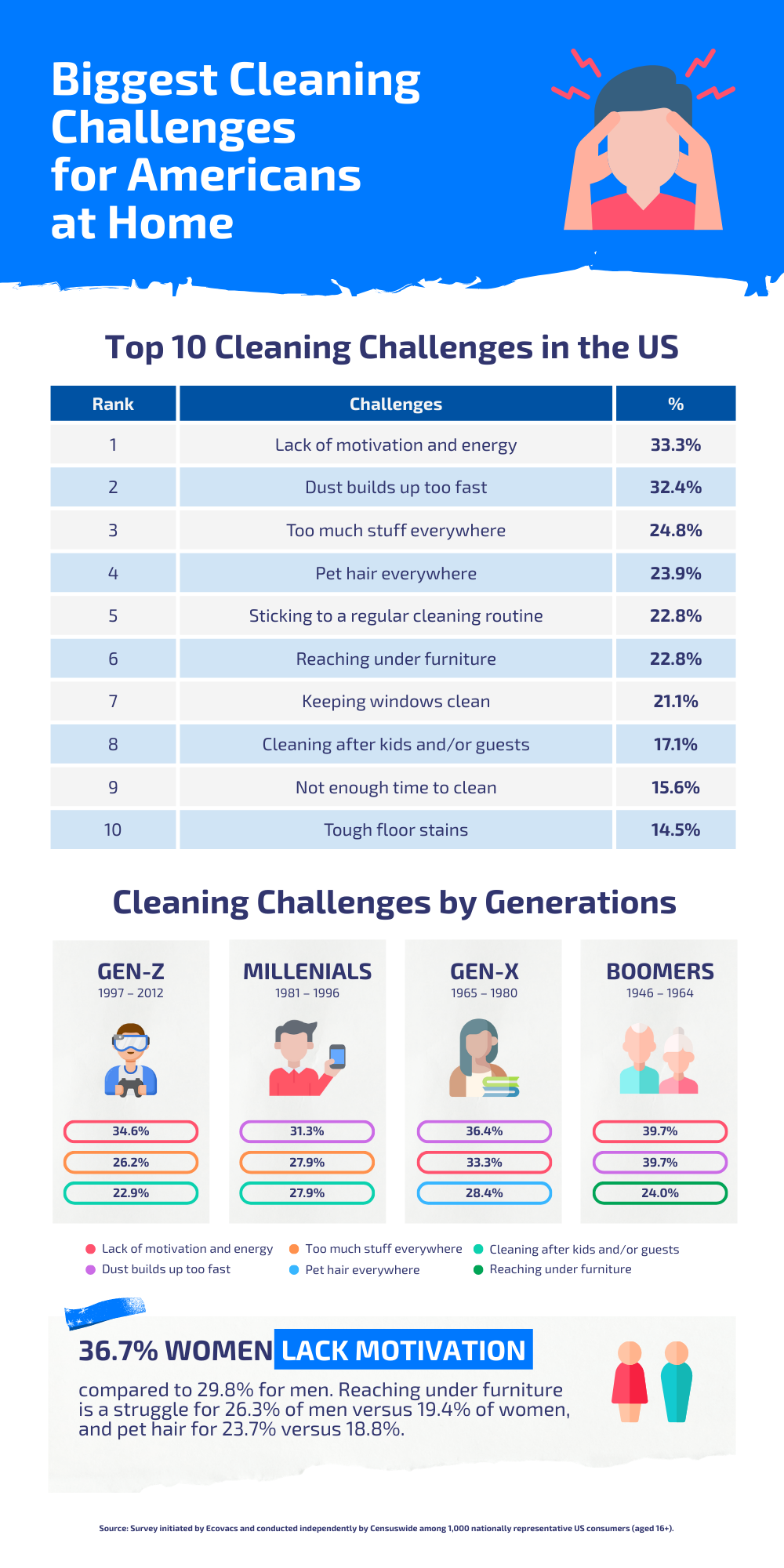
Nearly one in six respondents (15.6%) said they simply do not have enough time to dedicate to household cleaning, while one third (33.3%) admitted that a lack of motivation and energy was their biggest obstacle. Dust was the next most common issue, cited by 32.4% of Americans, followed by clutter, with nearly one in four (24.8%) saying that having too much stuff everywhere makes cleaning more difficult.
Pawrents also face challenges: One in four (23.9%) said pet hair is one of their toughest cleaning issues, underscoring how much animals contribute to everyday household mess.
The survey also highlights differences between men and women:
- Women are more likely to report a lack of motivation or energy (36.7% versus 29.8% of men) and nearly twice as likely to struggle with tough floor stains (9.6% versus 4.9%).
- Men, more often identify reaching under furniture as a challenge (26.3% versus 19.4% of women) and are more likely to view pet hair as a problem (23.7% versus 18.8%).
For Baby Boomers, reaching under furniture is also a significant issue (24.0%), which may reflect age-related physical limitations.
The Most Unusual Habits and Discoveries During Home Cleaning
From everyday norms to pet-related chores and even unusual cleaning behaviors, the survey highlights how lifestyle and culture shape the way Americans approach home cleaning.
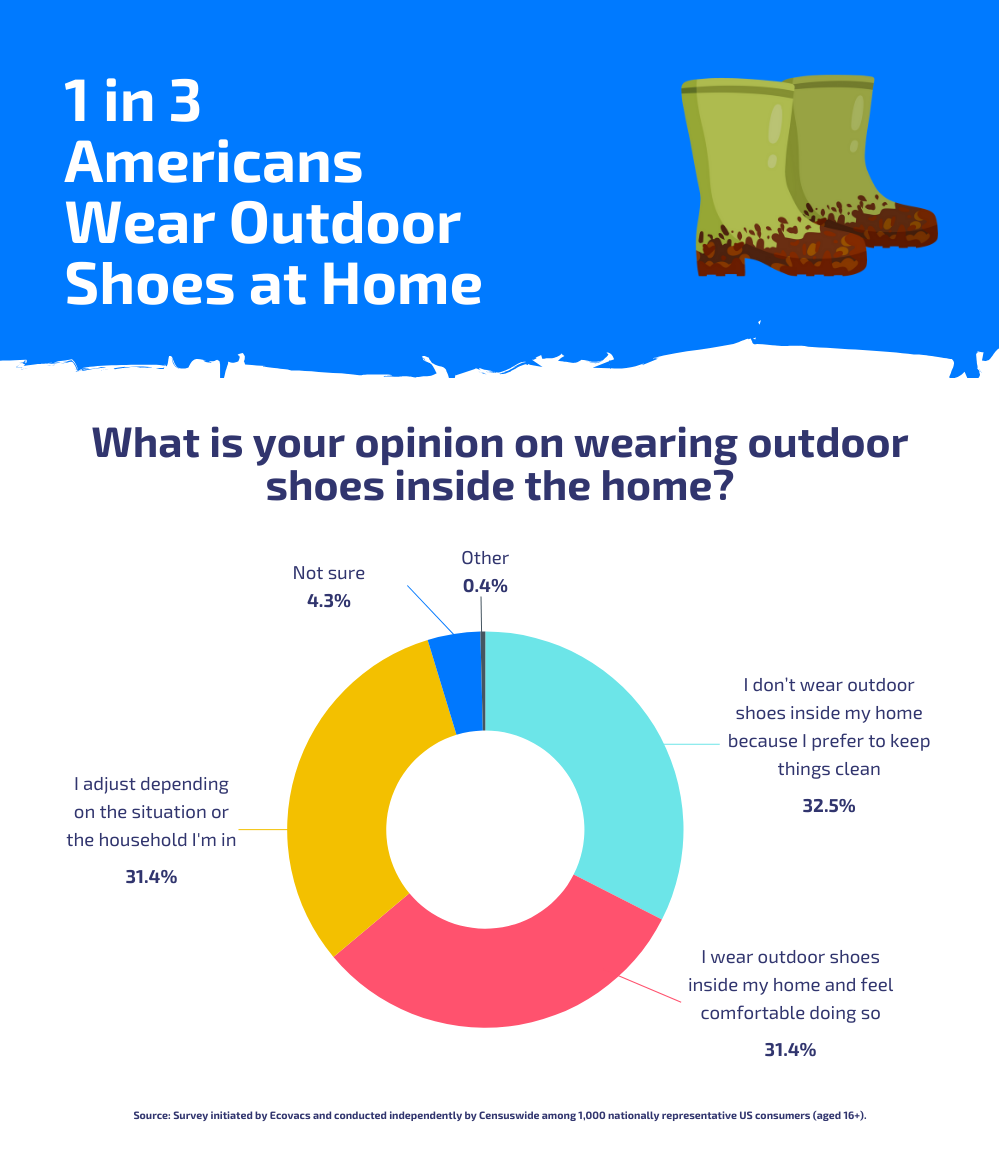
1 in 3 Americans wear outdoor shoes at home
When asked about everyday lifestyle habits, over one third of Americans (31.4%) said they feel comfortable wearing outdoor shoes inside their home, with men more likely than women to do so (34.3% versus 28.6%).
Top 10 quirky cleaning behaviors in the US
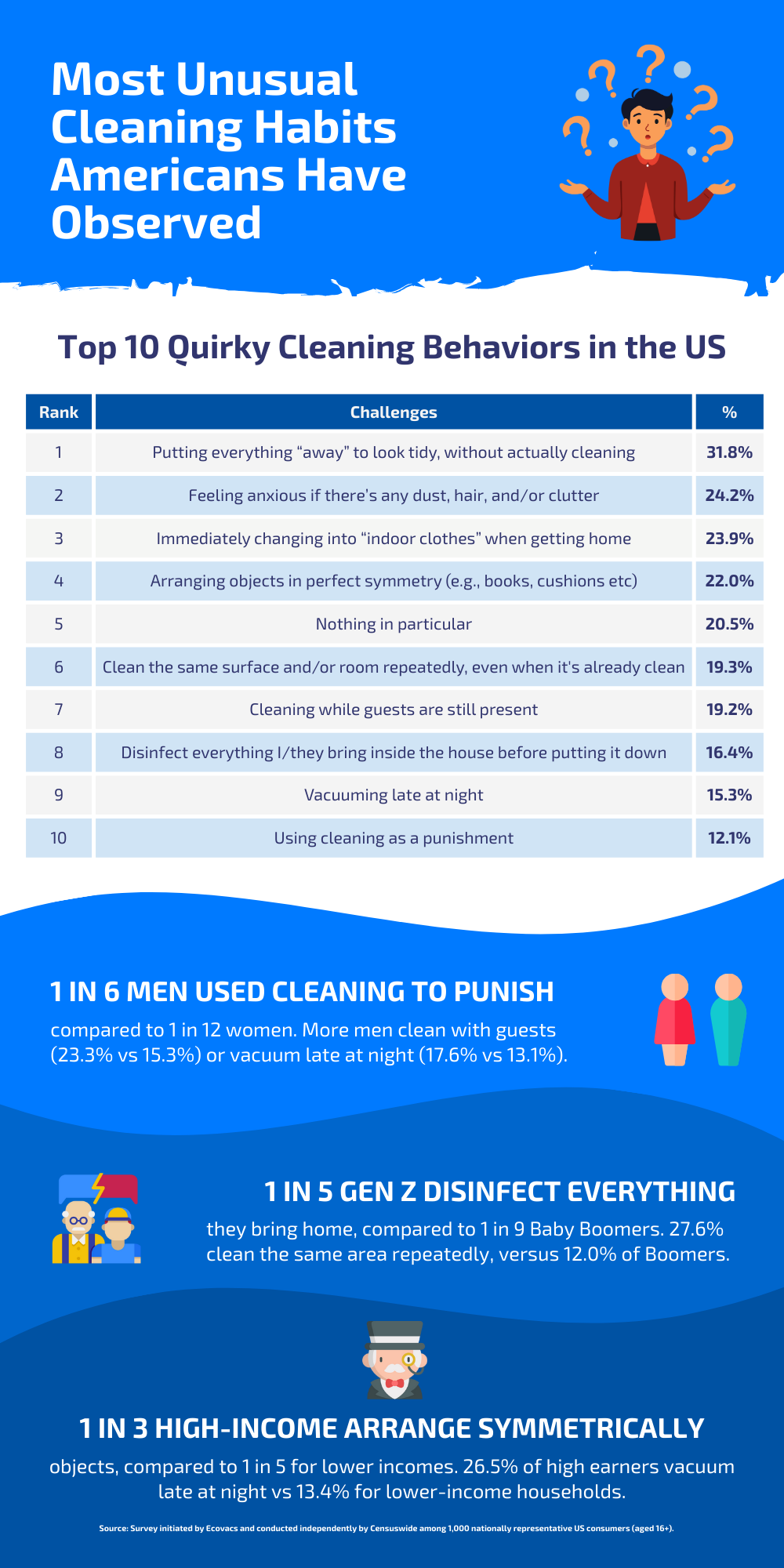
Beyond these lifestyle-driven habits, the survey uncovered unusual cleaning behaviours.
The survey also reveals that:
- Nearly one third of Americans (31.8%) said they sometimes put things “away” to make a home look tidy without actually cleaning.
- 24.2% reported feeling anxious if there is visible dust or clutter.
- 23.9% said they immediately change into “indoor clothes” when they get home.
Men additionally stood out for other behaviors: they were more likely to clean while guests were still present (23.3% vs. 15.3% of women) and to vacuum late at night (17.6% vs. 13.1%).
Generation wise, the survey shows that Gen Z and Millennials were more likely to report behaviors linked to clutter, anxiety, or family life, while older generations — especially Baby Boomers — were more likely to simply put clutter “away” without truly cleaning, or to avoid unusual behaviors altogether. Putting everything away to look tidy is the most common habit across all age groups.
Millennials (27.6%) and Gen Z (24.3%) were far more likely to clean while guests were still present, compared with just 7.9% of Boomers (+19.7 points). Gen Z also stood out for repeatedly cleaning the same area even when it was already clean (27.6% vs. 12.0% of Boomers, +15.6 points) and for disinfecting everything they bring into the home (20.6% vs. 11.6%, +9 points).
The dirtiest things found at home while cleaning
When asked about the dirtiest or most unpleasant discoveries during cleaning, four common findings emerged. More than a third of Americans (36%) said they had come across piles of hair or clogged drains, while nearly one in three reported uncovering layers of dust, grease, or grime built up over the years (33%) or discovering dead bugs and rodents (32%). Moldy or rotting food was also frequently mentioned, cited by 31% of respondents.
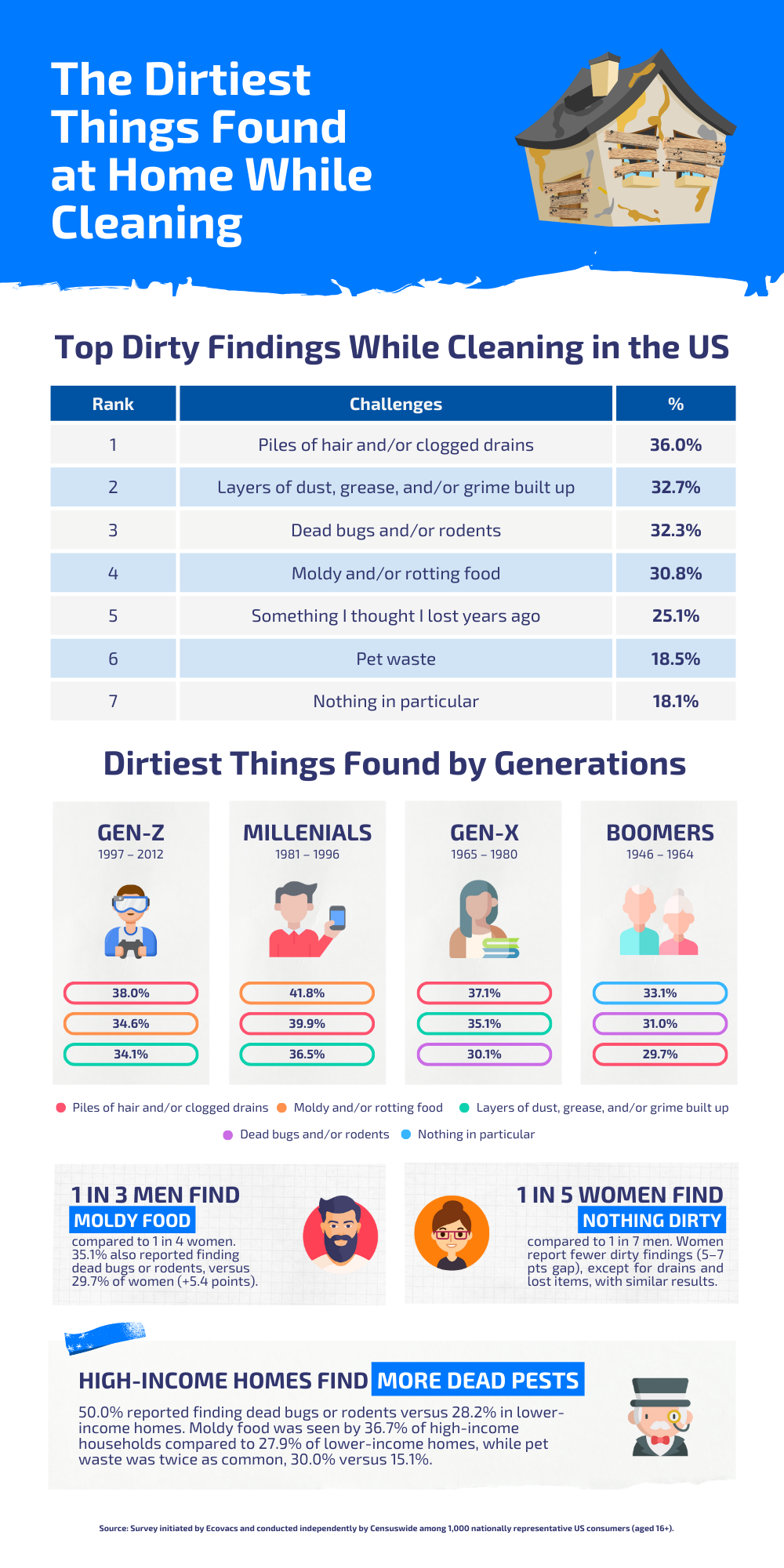
Men and women reported different experiences when it came to what they found. Men were more likely to come across moldy or rotting food (+6.7 points), dead bugs or rodents (+5.4 points), and layers of grease or grime (+4.6 points). On the other hand, women were more likely to say they hadn’t encountered anything particularly dirty (21% vs. 15% of men, +5.9 points).
While one third of Baby Boomers (33.1%) said they had never come across anything particularly dirty, other generations were more likely to report similar issues, with contrasts.
Millennials were the generation most likely to come across dead bugs or rodents, with more than one in three (35.4%) reporting this. They also topped the list for moldy or rotting food, at 41.8%, compared to 34.6% of Gen Z, 28.6% of Gen X, and just 18.8% of Boomers.
Gen Z was the most likely to report piles of hair or clogged drains (38.0%) and were also the group most often saying they rediscovered “something I thought I lost years ago” (31.7% vs. 18.4% of Boomers, +13.3 points).
1 in 3 American pet owners clean shedding hair and spilled food or water daily
For many Americans, pets are part of the family, but they also add an extra layer of cleaning to everyday life. The survey shows that pet owners face recurring messes that demand frequent attention.
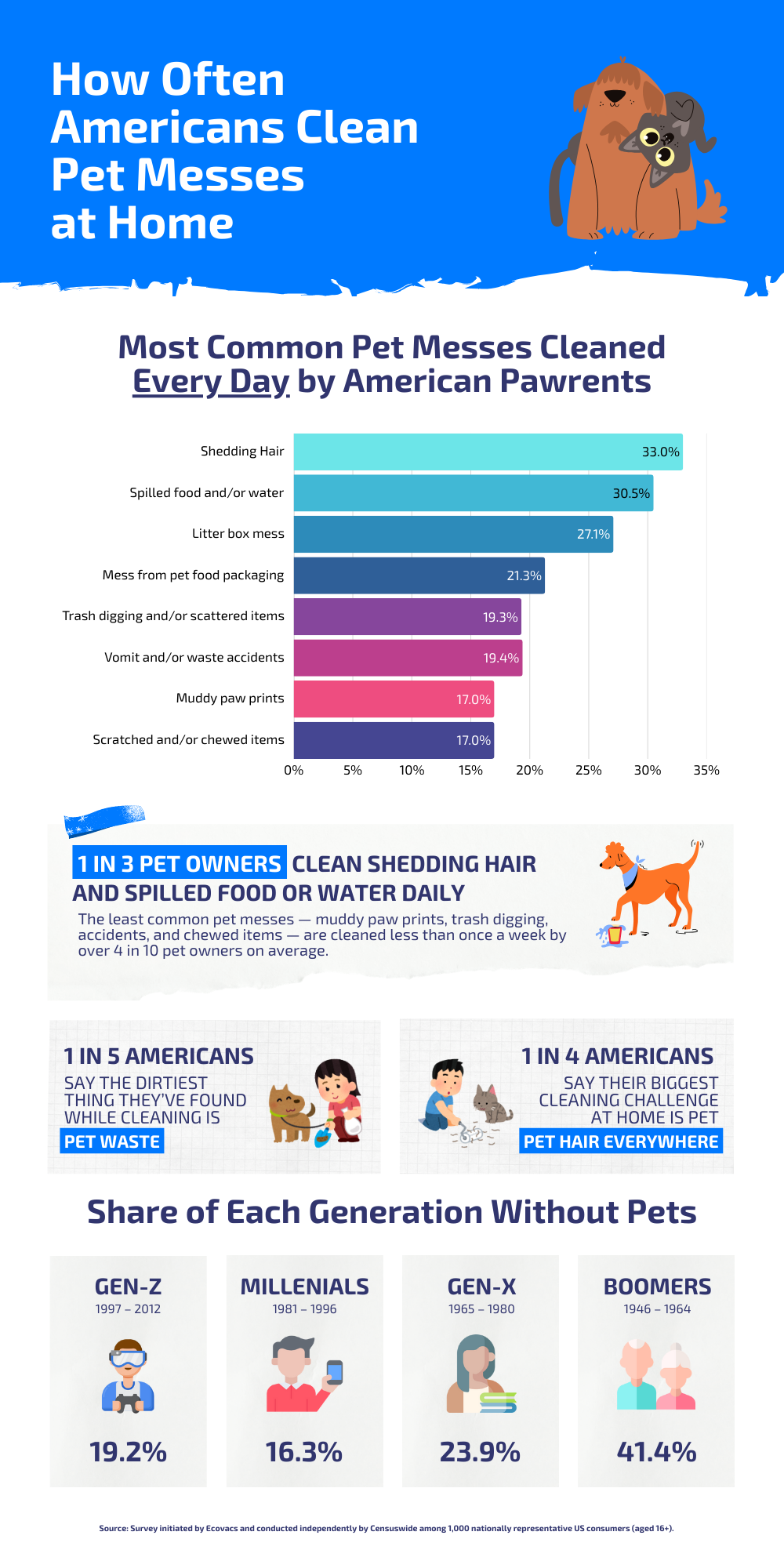
Among the cleaning challenges that pet owners face most regularly:
- Shedding hair is the top concern: 68.3% of owners said they deal with pet hair at least a few times a week, including one in three (33.0%) who reported cleaning it daily.
- Food and water spills are nearly as common, with 67.0% of owners mopping them up multiple times per week, 30.5 % mopping it up daily.
- Litter-box fallout is another frequent chore, with 27.1% cleaning it daily and nearly 60% at least twice a week.
Who cleans at home?
The survey not only explored how often Americans clean, but also who takes responsibility for household chores. It highlights that nearly two thirds of Americans (64.3%) say they personally do most of the cleaning in their household, while 14.7% rely primarily on a partner or roommate, and 6.5% on their parents.
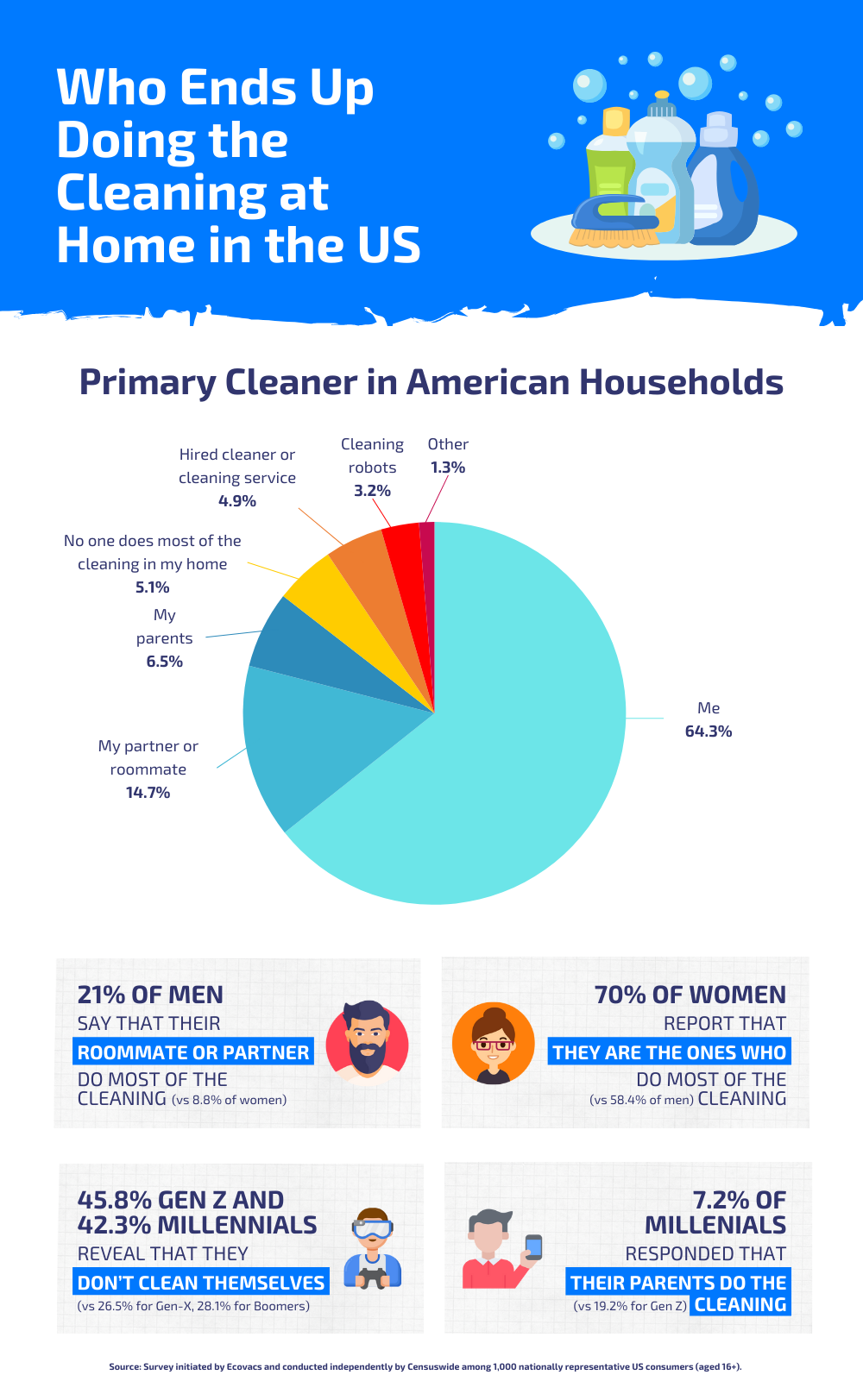
70% of women respondents reported handling the majority of household chores themselves. Meanwhile, 20.8% of men said their partner or roommate does the majority of cleaning, compared with just 8.8% of women (+12 point gap).
Age and income further shape how cleaning is divided at home as nearly one in five Gen Z respondents (19.2%) said their parents take care of most of the cleaning, compared with just 7.2% of Millennials.
Income levels also play a role: Lower- and middle-income households are the most likely to handle chores themselves (65.4% and 71.5%), compared to just over half of upper- and high-income households (55.4% and 56.7%). In wealthier homes, cleaning is more often delegated to a partner or roommate (20.0%–23.1% vs. 12.8%–15.2% in lower-income brackets). Hiring outside help remains less common overall but grows with income, from 2.9% of middle-income respondents to 10.0% of high earners.
The study provides a deeper look into the tools Americans use to keep their homes clean, revealing clear preferences in how cleaning is done. Traditional cleaning tools still dominate, with more than eight in ten respondents using cloths and disinfectants (81.7%) or a broom (80.0%) weekly. Two thirds also rely on non-robotic vacuums (66.4%) and traditional mops (63.6%). According to the survey, robotic solutions also show notable penetration, with robot vacuums used by 30.4% of Americans.
Methodology
You can access the full dataset on Google Drive to learn more about American home cleaning habits.
The research was conducted by Censuswide, among a sample of 1,000 Nat Rep US consumers (aged 16+). The data was collected between 09.07.2025 - 11.07.2025.